Customer use case
Strengthening CT Services Through Remote Specialist Support.
Remote support enables departments to support radiographers and makes it possible to have standardized protocols at different locations. It offers support for complex investigations and for training new employees, while application specialists can make adjustments to protocols.
Executive summary
Remote specialist support helps radiology departments offer a wide range of diagnostic services when suitably experienced radiographers are not always available on site. It also supports training and standardized imaging protocols across facilities.
The starting point
Customer Challenge
Main Challenge
Offering a wide range of diagnostic services when there are not enough qualified staff on site and maintaining consistent imaging standards across facilities.
Department
Radiology Department
Location
Kernspinzentrum Hamburg
MedTech
CT
Remote expertise, local care
Solution with roclub
Solution
Remote specialist support for complex CT examinations, training and protocol adjustments across locations.
User benefit
Radiographers can receive remote expert support and training, while application specialists can make adjustments to protocols.
Main benefit
Remote expert support can help departments make better use of scanner capacity, reduce travel expenses and maintain service availability.
The challenge
CT expertise is needed across locations. Experienced radiographers are not always on site.
Limited access to experienced radiographers and inconsistencies in protocol implementation can restrict the ability to offer specialized examinations across all facilities. This can result in reduced service availability, delays in access to care and variations in image quality.
Before remote support
Limited on-site expertise and inconsistent imaging standards.
- Suitably experienced radiographers are not always available on-site to perform complex examinations, including cardiac CT and paediatric CT, confidently and consistently.
- Facilities need standardized imaging protocols to deliver consistent image quality while optimizing radiation dose and contrast agent administration according to each patient's clinical needs.
- Infrequent evaluations and limited access to expert guidance can leave staff feeling undertrained and uncertain when performing complex examinations.
- Inconsistent protocol adherence can result in unnecessarily high radiation doses.
With roclub
Remote specialist support and training.
- Remote support for complex investigations and training new employees.
- Application specialists can make adjustments to protocols.
- Experienced radiographers and clinical specialists can provide training, supervision or support across locations remotely.
- Remote expert support can be provided during night shifts and other periods when experienced staff may not be available on-site.
Core requirements and considerations
What makes it possible.
Three building blocks for a secure, practical and scalable implementation.
Technology & Connectivity
The technology that enables remote access
- Secure connectivity to the clinical environment
- roclub platform and remote access
- Compatible medical imaging equipment and workstation setup
Clinical Workflow
The processes that make remote operations possible
- Standard operating procedures for remote operation, support or education
- Standard operating procedures for local clinical processes and patient safety
- Clearly defined roles and responsibilities between local and remote teams
People & Expertise
The local and remote expertise behind the workflow
- Qualified or trained local clinical staff responsible for patient care and management
- Qualified and experienced remote operators or specialists
- Collaboration between local and remote teams
Value by perspective
One workflow. Different benefits.
Value created for patients, staff and healthcare providers.
Access to specialized CT expertise.
Remote access to specialised CT expertise helps patients receive high-quality examinations and diagnosis.
- Access to specialized CT expertise without long travel distances
- Better availability of examinations
- High-quality CT examinations and diagnosis
Remote expert support and training.
Experienced radiographers and clinical specialists can provide training, supervision or support remotely, allowing specialists to support multiple sites.
- Support for complex investigations
- Training for new employees
- Experts educate radiographers on specialised examinations remotely
Better use of scanner capacity.
Remote access to experienced radiographers and clinical expertise can help facilities offer a broader range of examinations without relying solely on the availability of specialized staff at each facility.
- Better use of existing scanner capacity
- Remote expert support during night shifts and other periods when experienced staff may not be available on-site
- Reduced travel time and transportation costs for training, supervision or support
- Potential for longer operating hours and additional scanning sessions
roclub enables radiology departments to allocate staff more efficiently, since the expert does not necessarily have to be on site. Remote access also supports protocol updates and training.
Outcomes
Evidence of impact and success.
Change enabled by roclub Remote Operations
Scanner utilisation
Exam turnaround time
Patient wait time
Remote exam volume
Staff efficiency
Cost savings
Using roclub´s Teleoperation Platform on the CT scanner enables us to train new employees much more quickly and provide support across all locations at any time. We also use remote access to optimise our CT scanner protocols in collaboration with MPE/radiation safety officers and to conduct training sessions. We plan to expand this use case even further in our training programmes in the near future, giving tomorrow's radiographers their first glimpse of the CT scanner right from the classroom.
Expansion opportunities
Start with one workflow. Scale across modalities and sites.
How this use case can expand to other modalities, departments and clinical networks.
Potential to expand to:

CT
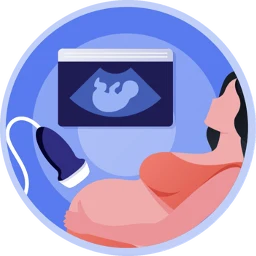
Ultrasound

MRI
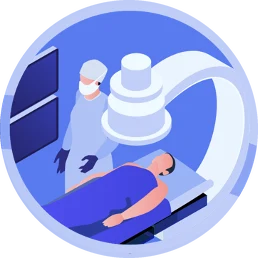
X-Ray / IR
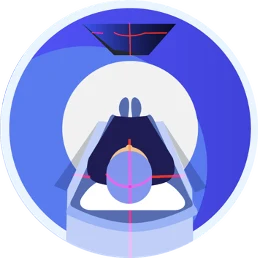
Nuclear medicine

Laboratory
Larger circles: expansion opportunities in this use case
CT, MRI, Nuclear medicine
Explore the right remote workflow for your CT services.
Discuss local requirements and the collaboration model for remote CT support and training.